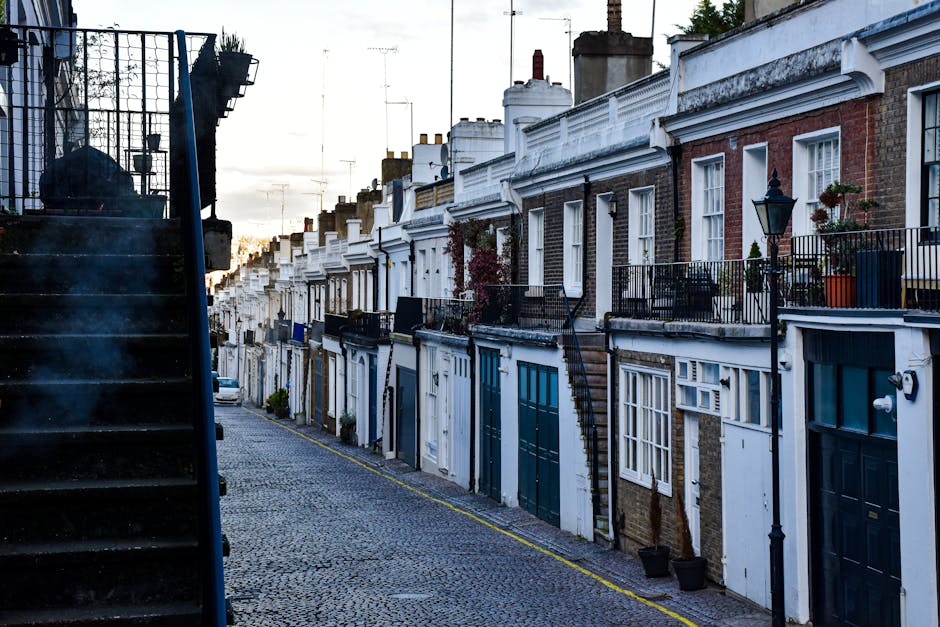
Richmond Hill removals for narrow streets and steep steps: a practical guide to moving safely and smoothly
If you are planning Richmond Hill removals for narrow streets and steep steps, you already know this is not a straightforward "park outside and carry everything in" job. The layout, the gradients, the tight turns, the parked cars, the stairs that seem to go on forever - it all changes how a move needs to be handled. Truth be told, the difference between a stressful day and a calm one usually comes down to planning, vehicle choice, and the team's experience in tricky access.
This guide breaks down what matters, how these moves actually work in practice, and what to ask before you book. You will also find a checklist, a comparison table, and a realistic example so you can judge the right approach for your home, flat, or office move in Richmond Hill.
Why Richmond Hill removals for narrow streets and steep steps matters
Richmond Hill is lovely, of course, but moving there can be a puzzle. Streets may be narrow enough that two vehicles meeting each other becomes awkward very quickly. Some properties sit above road level, with front steps, shared entrances, side access, or long internal staircases. A normal removals plan can fall apart fast if it assumes easy loading, a wide bay outside the door, or a simple lift-and-go route.
That matters for three big reasons. First, time: difficult access usually means more walking distance, more careful lifting, and more time on site. Second, safety: steep steps and awkward kerbs increase the risk of damage and injury if items are rushed. Third, cost control: if the team arrives without the right equipment or vehicle size, the whole move can become inefficient. And nobody wants that halfway through a wet afternoon in south-west London.
There is also a human side to it. When you are moving out of a house on a hill or a first-floor flat with an awkward staircase, the day can feel unusually personal. Boxes are heavy, nerves are high, and even a small delay feels bigger than it should. A well-planned move does more than shift furniture. It gives you breathing room.
How Richmond Hill removals for narrow streets and steep steps works
The best removals for tight-access properties start before moving day. A proper plan usually begins with access questions: where can the vehicle stop, how far is the carry distance, are there steps outside, is the staircase narrow or turning, and can large items physically fit through doorways and landings? These details sound basic, but they shape everything.
From there, a mover may recommend a smaller vehicle, a shuttle system, extra crew, specialist lifting gear, or a staged move with storage. For example, if a larger lorry cannot safely use the road, the team may use a smaller van for the final approach. If the route includes several flights of stairs, they may split the load into lighter, manageable lifts rather than trying to force oversized furniture through in one go.
In many cases, the move is also planned around timing. Early starts can help with parking and traffic. A calmer street at 8 a.m. can make a surprising difference compared with a lunchtime slot when every gap is taken. Sometimes the most practical move is the one that looks slightly unglamorous on paper - a smaller vehicle, a few more trips, a bit more padding. Boring? Maybe. Effective? Absolutely.
If you are moving a flat, you may also want to look at flat removals for more context on handling access, stairs, and building-specific restrictions. For a broader overview of local moving support, local removals can be useful too.
Key benefits and practical advantages
A move planned for narrow streets and steep steps brings advantages that go beyond convenience. It reduces pressure on the day and lowers the chance of avoidable mistakes. That is the simple version. The fuller version is a bit more interesting.
- Less risk of damage: smaller vehicles, clearer route planning, and better handling reduce knocks on bannisters, walls, and furniture.
- Safer lifting: items can be carried in a way that suits the staircase rather than forcing awkward angles.
- Better timing: a well-chosen arrival window helps with parking and fewer interruptions.
- Less stress: when access is mapped properly, you are not making decisions under pressure on the pavement.
- More realistic budgeting: access issues are accounted for before the move starts, rather than becoming a surprise on the day.
There is also flexibility. If you are not ready to move everything at once, you can combine removals with storage. That is especially useful when the old and new homes do not line up neatly. A short gap between completion dates, redecorating delays, or a temporary lack of space can all be handled more calmly with removals and storage, short-term storage, or even self storage.
For people moving delicate furniture up and down stairs, a careful packing plan matters too. That is where packing services can take a lot of the strain out of the process.
Who this is for and when it makes sense
This type of move is for anyone dealing with access that is less than ideal. In Richmond Hill, that often means homeowners on steep roads, tenants in upper-floor flats, people in converted buildings, and small businesses in premises with limited loading space. It is also relevant for people moving bulky items rather than full households. One sofa on a tight staircase can be trickier than ten boxes in an open hallway. Funny, but true.
It makes particular sense if any of the following sound familiar:
- Your street is too narrow for a large van to wait safely outside the property.
- There are steep front steps, split-level entrances, or several flights inside the building.
- You live in a converted house, maisonette, or older building with awkward corners.
- You are moving during busy parking hours and need a tight, realistic schedule.
- You have large or fragile items such as wardrobes, beds, mirrors, desks, or appliances.
- You need a move that combines transport with temporary storage.
If your move is smaller, a service such as small removals or man and van may be the most practical fit. For house moves where the access is tight but the load is still substantial, house removals is the more relevant route.
Office movers face the same access headaches, just with more cables, desks, files, and time pressure. In that case, office removals and office storage can work together very neatly.
Step-by-step guidance
Here is the simple, sensible way to handle a Richmond Hill move where access is awkward. It is not flashy. It just works.
- Measure the access properly. Check staircase width, doorway width, ceiling height on turns, step counts, and any low walls or railings outside.
- Note the parking reality. Decide where the vehicle can stop, whether that space is legal and safe, and how far the carry will be.
- List awkward items early. Sofas, mattresses, wardrobes, pianos, tall mirrors, and garden furniture all deserve special attention.
- Choose the right service level. A smaller local move may suit local removals, while a full domestic move may need a broader removals service.
- Plan the load sequence. Put the hardest items at the front of the job while everyone is fresh.
- Protect the property. Use floor protection, bannister covers, and door protection where needed.
- Build in a little time margin. Steep steps and tight streets slow things down. That is normal.
- Keep essential items separate. Kettle, phone charger, documents, medication, and one clean set of clothes should not be buried under boxes.
A good mover will usually ask more questions than you expect. That is a good sign. If they do not, you should probably ask the questions yourself.
Expert tips for better results
After enough moves in awkward parts of London, a pattern appears. The moves that go smoothly almost always have the same habits behind them.
- Use smaller loading distances where possible. Sometimes two short carries are safer than one long, clumsy one.
- Disassemble bulky furniture in advance. Beds, tables, and certain wardrobes move far better in pieces.
- Label by room, not just by item. On a difficult staircase, efficiency is everything.
- Protect corners aggressively. Narrow hallways and sharp turns are where damage likes to happen.
- Keep a clear walkway. A single coat rack or shoe cabinet can become a trip hazard on steps.
- Check weather the night before. Rain makes exterior steps and pavements much more slippery. Obvious, yes, but worth saying.
One practical trick: photograph the staircase, front path, and parking area when you book. It helps avoid assumptions. And it helps the team arrive with the right attitude, which matters more than people think.
If your move involves heavy furniture that may need storing before delivery, furniture storage can be a useful bridge between properties. For valuable or business-sensitive items, secure storage and document storage may make sense.
Common mistakes to avoid
Most access-related moving problems are avoidable. The frustrating bit is that they are usually avoidable in quite ordinary ways.
- Assuming a large van will be fine. A road may look wide enough at first glance, but turning, parking, and unloading can tell a different story.
- Forgetting about the return path. Carrying out is one thing. Bringing items in after delivery can be harder if the route is congested or dark.
- Leaving fragile items unprotected. Mirrors, frames, lamps, and glass surfaces need more than hope and a blanket.
- Ignoring stair width on landings. The tight spot is often not the stairs themselves, but the turn.
- Booking too late in the day. Parking pressure and fatigue both build up by late afternoon.
- Not declaring bulky items early. Surprises on moving day are nobody's favourite thing, especially with a wardrobe wedged halfway round a turn.
Another common one? Thinking the job will be faster because it is "only a few things." Sometimes a few things are exactly the things that are hardest to move. A sofa does not care that the rest of the house is packed already.
Tools, resources and recommendations
You do not need a truckload of gadgets to manage a tricky Richmond Hill move, but a few practical tools can make the day much easier.
| Tool or support | What it helps with | Best used when |
|---|---|---|
| Furniture straps | Safer lifting and steadier handling on stairs | Large, awkward, or top-heavy items |
| Corner protectors | Reducing knocks in narrow hallways | Older properties or tight turns |
| Floor protection | Keeping steps and hallways clean and less slippery | Wet weather or carpeted interiors |
| Smaller vehicle option | Easier access on narrow roads | Limited parking or tight turning space |
| Storage plan | Splitting the move into manageable stages | Completion gaps, refits, or downsizing |
For many people, the smartest recommendation is not one service but a combination. For example, a flat move might be handled through flat removals plus short-term storage. A business relocation might pair business storage with office removals. That kind of planning often saves time, not adds to it.
If you want to compare options before committing, pricing and quotes is the sensible next stop. And if you are checking who you are dealing with, the pages on about us and insurance and safety are worth reading too.
Law, compliance and best practice
For a move like this, the main compliance concerns are practical rather than dramatic. In the UK, removal work should be carried out with proper regard for health and safety, safe manual handling, road use, parking, and property protection. That sounds obvious, but in a steep or tight setting, the basics really matter.
Good practice usually includes:
- careful risk assessment of stairs, surfaces, and access points;
- safe lifting techniques and team coordination;
- clear communication about vehicle access and parking;
- appropriate insurance for transport and handling risks;
- respect for building rules, neighbours, and shared access spaces.
If your property is part of a managed block, there may also be rules around lift use, loading bays, or quiet hours. Those are building-specific, so it is worth checking in advance rather than finding out at the front door with a mattress in hand. Nobody wants that moment.
For reassurance on company standards, it helps to review the site's health and safety policy, terms and conditions, and payment and security information. If anything ever needs following up, the complaints procedure should also be clear and easy to find.
Options, methods, or comparison table
Different moves call for different approaches. The best option depends on how steep, narrow, and cluttered the access really is. Here is a practical comparison.
| Approach | Best for | Pros | Trade-offs |
|---|---|---|---|
| Full-size removals vehicle | Properties with decent roadside access | Efficient, fewer trips | May be impossible on narrow streets |
| Smaller van or shuttle system | Narrow streets and awkward parking | More flexible, easier access | May take longer overall |
| Man and van | Smaller moves or partial loads | Simple, adaptable, often cost-effective | Less ideal for very large households |
| Removals plus storage | Moves with delays or space constraints | Reduces pressure, creates flexibility | Requires extra planning |
If you are moving out of a compact home or just a few bulky items, man and van or small removals may be enough. If you need to clear a property gradually, mobile self storage can be a very tidy solution because the load can be taken away without forcing you to coordinate everything in one frantic afternoon.
Case study or real-world example
Picture a typical Richmond Hill flat move on a wet Tuesday morning. The street is narrow, one side is already lined with parked cars, and the building sits a few steps above road level. The stairwell has one tight turn near the middle and a low ceiling on the landing. Nothing impossible, but definitely not easy.
Instead of arriving with the biggest vehicle available, the move is planned around a smaller van and a shorter carry distance. The sofa is measured before the day. The wardrobe is dismantled. The boxes are grouped by room. A friend is not asked to "just help with the heavy bits" at the last second, because that never ends as well as people hope.
What changes the outcome is the order of operations. The team starts with the bulkiest items while energy is high. Floor protection is laid before anything moves. Fragile items travel separately. The final load is checked against the stair route before anyone lifts it. The whole job still takes effort - of course it does - but it feels controlled rather than chaotic.
That is the real value of planning for narrow streets and steep steps. Not perfection. Control.
Practical checklist
Use this before booking or on the day itself. It keeps the move grounded.
- Measure stair width, doorway width, and any tight turns.
- Check where a vehicle can legally and safely stop.
- List the largest and most awkward items.
- Confirm whether furniture needs dismantling.
- Protect floors, steps, and bannisters.
- Separate essentials you will need first night or first day.
- Keep neighbours or building managers informed if needed.
- Allow extra time for carrying, turning, and loading.
- Consider storage if completion dates do not align.
- Check insurance and service terms before confirming the booking.
If you are moving with children, pets, or a lot of breakables, make that part of the plan too. It sounds small, but it reduces chaos more than you might think.
Get a free quote today and see how much you can save.
Conclusion
Richmond Hill removals for narrow streets and steep steps require a smarter kind of planning. The property access, parking, stairs, and timing all matter more than they would on an easy suburban road. Once you accept that and plan around it, the move becomes far more manageable. Less rushing. Less strain. Fewer surprises.
The best outcome is rarely the one that looks simplest on the surface. It is the one that respects the reality of the building and the street outside. If you do that, even a tricky Richmond Hill move can feel calm, organised, and properly handled.
And honestly, that calm feeling on moving day is worth a lot.
Frequently Asked Questions
How do you move furniture up steep steps safely?
You plan the route first, measure the tight points, and use the right number of people for the item. Heavier furniture may need dismantling, straps, and protective covers. The key is not speed; it is control and steady communication.
Can a large removals van fit on Richmond Hill streets?
Sometimes yes, sometimes no. It depends on the exact road layout, parking pressure, and turning space. In many cases, a smaller vehicle or shuttle approach is more practical than forcing a large lorry into a tight spot.
What should I tell my removals company before booking?
Tell them about narrow streets, steep steps, access gates, low ceilings, parking limits, and any bulky items. The more accurate the information, the more realistic the plan will be. A few details upfront can save a lot of bother later.
Is it cheaper to use a man and van for a difficult-access move?
For smaller loads, it often can be. But the cheapest option on paper is not always the best one if stairs, turns, or repeated trips make the job slower. Compare what is actually included, not just the headline price.
What items are hardest to move on steep stairs?
Wardrobes, sofas, mattresses, American-style fridges, mirrors, and large desks often cause the most trouble. Anything bulky, heavy, or awkwardly balanced can become difficult very quickly on a narrow staircase.
Should I dismantle furniture before the move?
If it can safely be done, yes. Dismantling beds, tables, and certain wardrobes usually makes the move easier and safer. It also helps protect the property from scuffs when going round corners.
What if my move-in and move-out dates do not line up?
Then storage is often the simplest bridge. Short-term storage, self storage, or removals and storage can help you avoid rushing or leaving things in the wrong place for too long.
Do movers protect walls and bannisters in tight properties?
Good movers should, yes. In tight hallways and staircases, protection for walls, corners, bannisters, and floors is part of sensible practice. It is worth asking how they handle this before the day arrives.
How long does a narrow-street, steep-step move usually take?
Longer than an easy-access move, naturally. The exact time depends on the number of items, parking distance, stairs, and whether furniture needs dismantling. Extra time is normal and should be planned in rather than treated as a problem.
Can I combine a local move with storage?
Yes, and it is often a very smart move for properties with awkward access or delayed completion dates. Local removals paired with short-term or long-term storage can make the whole process much calmer.
What is the best option for a small flat in Richmond Hill?
For a smaller property, flat removals, small removals, or man and van may be the most efficient options. If the stairs are narrow and access is limited, ask for a plan that reflects the building rather than a generic quote.
How can I get a quote that reflects the real difficulty of the move?
Give honest details about access, parking, stairs, and the biggest items. If possible, share photos and measurements. That way, the quote is much more likely to match the actual job on the day.
What if I am moving an office rather than a home?
Office moves can be just as tricky, especially in converted buildings or upper-floor spaces. Office removals, office storage, and secure storage can help keep equipment and paperwork organised without turning the move into a scramble.